Warden training turns common staff into a trusted emergency situation control group. When alarms noise and adrenaline spikes, these are individuals who read the scenario, stable the room, and move others to safety and security. Whether you are taking a fire warden course for the very first time or tipping up to chief warden responsibilities through a PUAER training course, the goal is the same: clear duties, disciplined technique, and sound judgment when problems change. This overview mixes Australian training standards like PUAFER005 and PUAFER006 with lived experience from drills and actual evacuations, so you can construct a program that does greater than tick a conformity box.
What a Warden Actually Does
On paper, a warden checks locations and companions individuals out. In technique, the task stretches well beyond that. You come to be the eyes and ears of the Emergency Control Organisation, linking regional information to the chief warden's big-picture choices. You translate policy right into activities that work in uncomfortable corridors, smoky stairwells, and crowded foyers.
Wardens are designated areas. They find out the layout, passengers, normal risks, and quirks of their location. The elevator that trips during storms, the fire doors that close slowly, the easily accessible departure with the lip that catches pedestrians and mobility devices. During an event, they move their zone, handle passengers, report conditions, and adjust. Later, they log what occurred with simple facts, not drama, because records drive improvements.
A little instance from a workplace tower: a warden discovered that a regular delivery obstructed the B2 egress with piled pallets. It never ever triggered a complaint, however it slowed down trials by 90 secs. Taking a picture and logging it transformed the packing dock's shipment window, removing a threat that had actually sneaked in quietly. Great wardens take care of the tiny things prior to it comes to be big.
Training Courses and Where They Fit
Australia's common paths for emergency warden training depend upon two systems of competency.
First, PUAFER005, often listed as "PUAFER005 operate as part of an emergency control organisation," establishes the structure. A good PUAFER005 course covers the framework and duties inside the ECO, alarm system evaluation, emptying concepts, interaction methods, and basic danger acknowledgment. New wardens should complete it, after that rejuvenate every 1 to 2 years to keep skills present and preserve confidence. Providers in some cases call this an emergency warden course or simply warden training. The material ought to be useful, with site-specific elements, not just slides.
Second, PUAFER006, "PUAFER006 lead an emergency control organisation," develops leadership capability. If you are tipping up to chief warden, replacement, or interactions officer, a PUAFER006 course gives you devices to make time-sensitive decisions, coordinate wardens, and liaise with initial responders. Chief warden training requires circumstance job that requires you to consider alternatives with incomplete details, due to the fact that during an actual event, perfect information hardly ever arrives.
These training courses comprise the core of a robust warden program, and they ought to sit inside a cycle of drills, debriefs, and regular equipment checks. Classroom knowledge assists, yet skills hone in the stairwell, not in a chair.

Fire Warden Needs in the Workplace
Employers should ensure a capable Emergency Control Organisation exists, is educated, and shows up throughout an emergency. That indicates choosing sufficient wardens to cover the website, consisting of backfills for leave and change patterns. A good general rule is at least one warden per 20 to 40 people, readjusted for format, danger account, and wheelchair demands. A solitary flooring with 2 wings and three tenants commonly take advantage of 2 or 3 wardens and an interactions role, also if headcount is modest.
Fire warden training requirements typically consist of familiarity with fire panel indications, alarm system tones, discharge routes, setting up areas, stairwell and door mechanics, and, importantly, the limitations of fire extinguishers. Extinguisher training can be valuable, however discharge precedes. Numerous occasions that look convenient escalate, and wardens that chase after fires as opposed to individuals often shed the risk-free home window for movement.
In complex workplaces like research laboratories, making plants, and medical care facilities, added modules will certainly cover chemical handling, oxygen-rich atmospheres, or patient activity techniques. For a blended office and stockroom website, run different instructions for forklift operators and office personnel. One size hardly ever fits all.
Colours, Hats, and Clear Identification
Visibility issues. Individuals look for a clear indicator of authority when alarm systems appear. That is why vests and helmets or hats continue to be useful, even with modern comms. The details colours differ by organisation and region, but within lots of Australian offices the convention corresponds: the chief warden hat colour is white. If you have questioned what colour helmet does a chief warden wear, that is the most common response. The chief fire warden hat colour must be unambiguous and constant across sites so service providers and visitors understand that to follow. A chief warden hat or vest that stands out in a group makes group control simpler.
Area wardens often put on yellow. Initial aiders often make use of green. A communications police officer might utilize red or another high-contrast colour. If you pick a bespoke system, publish the tale at vital areas and include it in induction so new beginners discover it promptly. An inexpensive vest that fits over wintertime coats and hi-vis is better than a best system nobody remembers.

Roles Inside an Emergency Control Organisation
The chief warden rests at the functional pinnacle. They evaluate the event, choose whether to evacuate, stage a partial emptying, or sanctuary in place, and after that collaborate the feedback. The chief warden responsibilities include alloting tasks, accounting for individuals, liaising with first responders, and remaining calm on the radio. Chief fire warden duties likewise extend to pre-event planning: seeing to it the ECO roster is existing, drills are set up, and lessons obtain actioned.
Deputy and interactions duties keep the chief warden concentrated. A communications police officer runs the radio internet, logs time-stamped updates, and presses clear guidelines in simple language. In a fire, secs feel slippery. Accurate log access offer private investigators and security groups a breadcrumb route for review.
Wardens handle their areas, report what they see, and control movement. They try to find individuals who ice up, that head to the incorrect departure, or who try to complete a task prior to leaving. They additionally do the unglamorous however essential job of examining features, storage places, and stairwells for stragglers.
How to Develop Credible Warden Capability
A warden course develops a beginning factor, yet performance improves with repetition and thoughtful practice. The most effective programs do four things well.
First, they make use of site-specific situations, not generic ones. If your building has two interconnected stairwells and a roofing system haven, method relocating individuals when one stairwell full of smoke and the fire panel sends out conflicting signals.
Second, they refresh regularly. Memory dulls. New employs join. Layouts change. Quarterly or biannual drills maintain the ECO cohesive.
Third, they measure something concrete. Time to initial move completion, time to all-clear at setting up, responsibility percentage, radio quality, and debrief action closure. Numbers focus attention.
Fourth, they produce psychological safety in debriefs. If wardens fear blame, they will sugarcoat conditions. Real renovation comes from candid, details feedback. A chief emergency warden who thanks people for elevating difficult points will improve intel next time.
Communications That Hold Up Under Pressure
Radio discipline can make or damage an evacuation. A channel clogged with chatter and duplication pressures the chief warden to guess. Maintain messages short, accurate, and structured. A beneficial pattern is location, condition, action. As an example: Level 8 West, heavy smoke in copy room, moving 30 personnel via south stairways. Avoid jargon. If doubtful, state the danger and what you need.
Some websites bolt a phone bridge onto the radio web, so outside incident groups can listen without sending. That can assist, however only if the key network continues to be tidy. In a major event, limitation transmissions to wardens and the communications policeman. Bystanders on radios, even with great intents, add noise.
Practical Situations You Should Drill
Scenario-based method is where training ends up being muscular tissue memory. Below are 3 that consistently disclose gaps, along with compromises and tips.
A smoldering electrical fire on a mid-rise office level. The alarm sets off, smoke is present but visibility stays good. The temptation is to grab an extinguisher and have a go. Teach wardens to determine the threat before coming close to. If the resource is unclear, or smoke is enlarging swiftly, do not fiddle with breakers or tools. Launch discharge, close doors to slow smoke spread, and report the origin area precisely if recognized. The compromise is speed versus assurance. You never wish to postpone evacuation while hunting for best clarity.
A damaged alarm system during peak rainfall. The fire panel shows a mistake on Level 4. You hear no regional alarm system tone, yet the panel rises after a few seconds. Drills must instruct wardens to confirm conditions without disregarding the panel. Send out one warden to inspect the indicated area while preparing for a partial emptying. If water breach is the wrongdoer, you may discover a wet detector or a triggered circulation button. Maintain the assembly point selection adaptable. If the default assembly is waterlogged or harmful, move to a second area and tell individuals why, just and clearly.
A mobility-assisted evacuation with a handicapped lift. Lifts normally can not be made use of. Identify haven factors early, such as safeguarded stairwells or fire-isolated lobbies, and discover their fire rating. Coordinate with first responders for assisted discharge. Exercising motion with mobility devices, walkers, and individuals that use oxygen desensitises the group and surface areas the sluggish factors. An extra warden, pre-assigned to mobility support, lowers hold-ups in the stairwell.
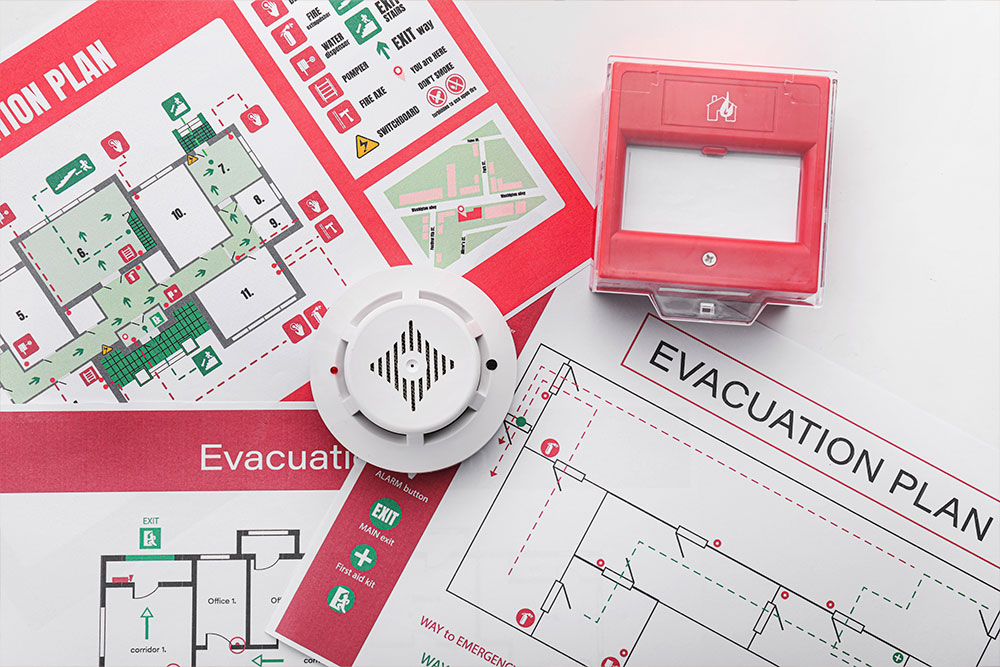
These scenarios test judgment, not just rote memory. Add sound. Mimic radio failures, a missing out on warden, or a 2nd alarm system on another degree. Anxiety screening in method develops grace warden course under pressure.
Extinguishers, Fire Coverings, and When Not to Make use of Them
Many fire warden training courses consist of practical extinguisher use. That is valuable, supplied the boundaries are clear. Fire expands quick, and a tiny, manageable flame can become a huge one in under a minute, especially with available gas like paper, plastics, or solvents.
Teach wardens to weigh three factors prior to trying to extinguish: the size and sort of fire, a clear egress course, and individual protective tools. If any kind of one of those is endangered, go back and prioritise emptying. For electric tools, a dry chemical or CO2 device is ideal, yet recurring warmth can reignite. After a knockdown, isolate power if educated and risk-free. Never ever go after a fire right into an edge where your https://andregyxn704.image-perth.org/fire-warden-vs-chief-warden-duties-duties-and-educating-paths getaway is cut off.
Fire coverings match cooking area oil fires in small pans, not deep fryers or business hoods. If your site has a kitchen, do a hands-on demonstration with a regulated rig. Concept alone fosters overconfidence.
Accounting for Individuals Without Slowing Down the Flow
Perfect roll telephone calls are rare in liquid offices. Contractors check in and out. Site visitors miss the booth when a meeting runs long. Warden teams require a functional strategy that stabilizes rate and accountability.
Many websites make use of a hybrid system: electronic access logs plus warden head counts and supervisor confirmations at the assembly location. If a person is unaccounted for, you require two checks. Initially, verify they got on site at the time of the event. Second, verify they are not already at a different setting up point. Prevent sending out wardens back into a structure to try to find a bachelor without first -responders aligned. Rather, give responders with last known location, most likely workspace, and mobility standing, then support their entry.
A chief warden that reveals routine updates at assembly lowers anxiety. Short, truthful messages work best: We have two individuals not yet checked off, responders are searching Degree 6 East, and we will certainly upgrade in three minutes. Silence types conjecture and a drift back into the building.
Common Pitfalls and Just how to Avoid Them
I have debriefed lots of drills and real occasions. The blunders repeat, but they are fixable.
Over-reliance on the principal. When the chief warden comes to be a switchboard, decisions slow. Delegate. Allow the communications officer run the log and radio, and ask certain wardens for condition on assigned checks. The principal ought to keep an eye on the broad photo and choose, not micromanage.
Unfamiliarity with website peculiarities. Refits adjustment stairwell exits. Security includes a turnstile that blocks very easy egress. Stroll your areas quarterly. Update zone maps and photo changes.
Mixed messages throughout evacuations. If flooring wardens tell team to stay put while the reveals an emptying, people ice up. Use a solitary channel of reality, ideally the PA, with radio updates funneled with the interactions officer.
Underestimating smoke. People tolerate light smoke longer than they should. Train wardens to expect cues like irritability, coughing, or an adjustment in ambient temperature. Shut doors behind you. Hold a damp towel to your face if required, but do not allow that end up being a factor to linger.
Poor flexibility preparation. If no clear strategy exists for those who can not make use of stairways, emptying stalls. Pre-assign a pal system. Recognize sanctuary areas. Maintain an emptying chair where it will certainly be made use of, not secured away.
The Chief Warden's Judgment Call
Chief fire warden responsibilities hone at the moment of choice. Do you evacuate the whole building or a solitary zone first? Do you hold individuals in sanctuary since exterior conditions are worse? There is no algorithm for this, yet there are anchors.
Start with the life safety and security power structure: move individuals out of prompt danger, then manage the incident if secure. Look for confirmation, not consensus. One warden's clear record from the scene outweighs 3 speculative remarks. If the situation is uncertain however possibly intensifying, launch emptying early. Remorses are less expensive outside the structure than inside.
If first responders take command on arrival, communicate what you recognize in 30 secs: occasion kind, impacted degrees, headcount status, dangers such as gas cyndrical tubes or web server areas, and any type of entraped or mobility-impaired individuals with last known places. Then move to sustain. A chief warden that keeps the ECO steady, preserves the headcount, and stops re-entry gives responders a tidy operating picture.
Site-Specific Layers: Beyond the Office
A stockroom adds forklifts, battery billing stations, racking, and often flammable fluids. A lab brings chemical storage, fume hoods, cryogenics, and waste segregation. Health care centers must pair discharge with patient safety, including life assistance factors to consider. The warden training for these atmospheres need to fold up in regional hazards.
In a storehouse, a spill reaction plan sits beside emptying preparation. Wardens have to know how to isolate the location and path people far from wind instructions if vapours are present. In a laboratory, guarantee safety information sheets are accessible which the chief warden can orient responders on vital compounds. In healthcare, method horizontal discharges, where clients are relocated into a nearby fire compartment as opposed to down several floors.
The factor is not to remember every side situation. It is to establish concepts and equip wardens with the neighborhood understanding to apply them quickly.
Drills That People Take Seriously
People roll their eyes at drills when they seem like theater. You can alter that by making drills short, actual, and purposeful.
Announce the quarter yet not the day. Utilize a genuine alarm tone, not a polite message. Infuse an easy complication, like an obstructed departure or a warden no-show, and then debrief what occurred. If you discover an issue, repair it and run a brief targeted drill within two weeks. That closing loophole is what persuades personnel your program matters.
When numbers assist, share them. If evacuation time goes down from 8 minutes to 5 mins throughout two quarters, say so. If accountability improves, highlight it. Progress develops buy-in.
Hats, Safety helmets, and Culture
People frequently inquire about fire warden hat colour and whether it really matters. It does, due to the fact that society is formed by tiny signals. A white helmet for the chief warden, yellow for wardens, and green for initial aiders may appear shallow, yet in smoke or stress, colour and clear labels punctured. If you do not make use of helmets, make use of high-contrast vests with large back and front print. Use them during drills, not just genuine occasions, so staff discover what to look for.
Choosing a Service provider and Establishing Expectations
Not all training is equivalent. A fire warden course that leaves you with unclear slides and no technique does little for an emergency situation. When selecting a provider for PUAFER005 or a PUAFER006 course, try to find instructors that ask about your website prior to they teach, who adjust examples to your design, and that demand real-time drills. Ask just how they evaluate proficiency. Ask exactly how they include your incident background. If they can not respond to, keep looking.
The finest suppliers treat you like a companion, not a booking. They motivate chief fire warden training that consists of decision-making drills, interactions training, and practiced handovers to very first responders. They must additionally help you draw up refresh cycles and encourage on paperwork that stands up to audits.
A Lean List That Functions Under Stress
Keep one checklist per function. Make it short, understandable, and laminated. Store it with the vest or hat so it is constantly at hand.
- Chief warden: validate alarm kind, determine emptying method, assign wardens to zones, trigger announcements, communicate with responders, obtain head count updates, stop re-entry, record timeline. Area warden: don vest, sweep zone including features and storage places, close doors, record conditions and head counts, straight to correct exit, aid mobility as designated, proceed to assembly, upgrade chief on completion.
If your site uses a communications policeman, give them a succinct log layout with time, source, message, and action. Clearness defeats brains throughout an event.
Evidence, Not Hype
The point of warden training is not to develop heroes. It is to develop a system that cuts mins off evacuation times, lowers complication, and maintains people secure. Step it. Review it. Enhance it. When an actual event occurs, the difference between a shuffling group and an orderly flow usually boils down to whether your ECO exercised for the building you in fact inhabit, not a common one from a textbook.
For those advancing through formal training, PUAFER005 builds the operational base, PUAFER006 creates management, and both take advantage of repetition. Include website nuance, keep communications clean, and furnish your wardens to make reasonable choices with imperfect details. That is the real examination they will certainly face.
A Brief Circumstance Walkthrough: From Alarm to All-Clear
You are the chief warden in a 12-level mixed-use building. At 10:42, the fire panel indicates an alarm on Degree 7 East. You initiate the : Focus please, this is the chief warden. We have an alarm on Degree 7 East. Wardens, report status. All passengers on Degree 7, prepare to evacuate using the east stairwell. You appoint your communications policeman to gather updates. A Degree 7 warden reports noticeable smoke near the kitchenette, most likely electrical. You rise to a complete Level 7 emptying and prepare Level 8 for potential motion if smoke migrates upward.
By 10:45, smoke is heavier. You prolong evacuation to Degree 8 as a precaution, utilizing the west stairwell to separate flows. You instruct wardens to shut doors behind them. The communications policeman logs each zone's sweep completion. One person with a knee injury on Degree 8 requires help. A warden accompanies them at a determined pace down the west stairways while another warden shadows to maintain the group moving.
At 10:49, firefighters arrive. Your handover is crisp: Alarm system came from Level 7 East kitchenette, smoke progression kept in mind, Degrees 7 and 8 left, one assisted discharge underway down the west stairs, no unsafe materials reported on those levels, two individuals not yet represented from Level 7 per gain access to logs, likely off-site yet unofficial. Responders go into using east stairways to check the origin and reset systems. You keep people at assembly and offer updates every three minutes.
By 11:02, responders report the source as a fallen short microwave capacitor. Fire out, smoke clearing up. You hold re-entry until they verify air high quality and the panel reset. At 11:12, with the all-clear from -responders, you present a controlled re-entry by floorings, starting with lower floorings to stop crowding. After personnel return, you run a 10-minute debrief with wardens, record the moment stamps, and assign actions: kitchen space appliance audit, stairwell signage update near Level 8, and a concentrated refresher course on movement assistance. A week later on, you complete those activities and run a brief drill to verify the fixes.
That is the cycle done well: identify, choose, act, find out, and improve.
Final Thoughts
Wardens do not require capes. They need clearness, technique, and tools that function under pressure. A self-displined program built on PUAFER005 for operational preparedness and PUAFER006 for leadership, supported by sensible drills and sensible devices, transforms a dangerous day into a convenient one. If you lead the program, treat every drill as an opportunity to find out something brand-new concerning your building and your team. If you serve as a warden, recognize your area, keep your head, and keep in mind that moving people safely is the win. The rest is detail.
Take your leadership in workplace safety to the next level with the nationally recognised PUAFER006 Chief Warden Training. Designed for Chief and Deputy Fire Wardens, this face-to-face 3-hour course teaches critical skills: coordinating evacuations, leading a warden team, making decisions under pressure, and liaising with emergency services. Course cost is generally AUD $130 per person for public sessions. Held in multiple locations including Brisbane CBD (Queen Street), North Hobart, Adelaide, and more across Queensland such as Gold Coast, Sunshine Coast, Toowoomba, Cairns, Ipswich, Logan, Chermside, etc.
If you’ve been appointed as a Chief or Deputy Fire Warden at your workplace, the PUAFER006 – Chief Warden Training is designed to give you the confidence and skills to take charge when it matters most. This nationally accredited course goes beyond the basics of emergency response, teaching you how to coordinate evacuations, lead and direct your warden team, make quick decisions under pressure, and effectively communicate with emergency services. Delivered face-to-face in just 3 hours, the training is practical, engaging, and focused on real-world workplace scenarios. You’ll walk away knowing exactly what to do when an emergency unfolds—and you’ll receive your certificate the same day you complete the course. With training available across Australia—including Brisbane CBD (Queen Street), North Hobart, Adelaide, Gold Coast, Sunshine Coast, Toowoomba, Cairns, Ipswich, Logan, Chermside and more—it’s easy to find a location near you. At just $130 per person, this course is an affordable way to make sure your workplace is compliant with safety requirements while also giving you peace of mind that you can step up and lead when it counts.